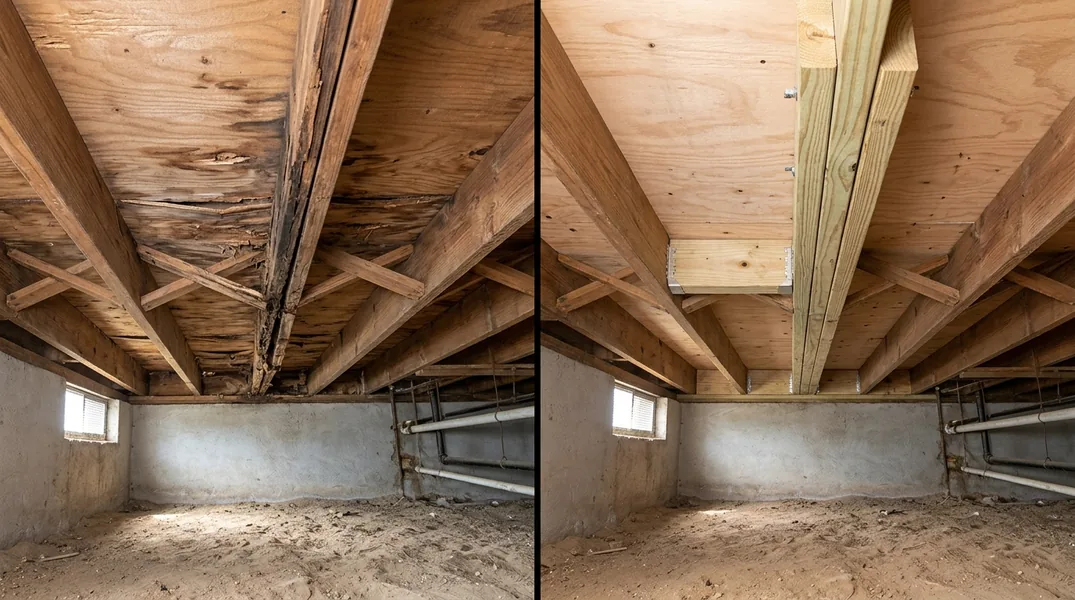
Why Oceanside Homes Face a Double Threat
If you own a home in Oceanside, you're dealing with two formidable enemies that can silently destroy your property's wooden structures: salt air corrosion and termite infestations. The coastal environment that makes living here so desirable also creates ideal conditions for both problems to flourish. Salt spray from the Pacific Ocean penetrates wood fibers, causing them to deteriorate from the outside in, while termites work from the inside out, consuming the cellulose that holds your home together.
The challenge for most homeowners is recognizing which threat they're facing. Many property owners assume any soft or discolored wood means termites, when in fact salt air damage might be the culprit. Conversely, some miss early termite infestations because they attribute the damage to coastal weathering. Understanding the difference is crucial because the solutions are completely different, and misdiagnosis can lead to wasted money and worsening damage. This guide will help you identify what's actually happening to your wood, so you can take the right action and protect your investment.
What Does Wood Rot Look Like: Identifying Salt Air Damage
Salt air wood damage develops gradually and follows a fairly predictable pattern that you can learn to recognize. When salt spray settles on exposed wood surfaces, it absorbs moisture and begins a chemical process that breaks down the wood's cellular structure. The first signs typically appear as discoloration, graying, or a weathered appearance on the exterior surfaces of wooden trim, siding, deck railings, and window frames. Unlike the sudden, localized damage termites cause, salt air damage tends to be widespread and affects exposed areas most severely.
As salt air damage progresses, what does wood rot look like in its advanced stages? The wood becomes soft and spongy to the touch, splinters easily, and may develop deep cracks or checking patterns. The surface often peels or flakes, and the wood loses its structural integrity from the outside working inward. Paint and stain fail prematurely in salt-affected areas, which is why you might notice your coastal home needs repainting far more frequently than inland properties. The damage is typically worst on the side of your home facing the ocean and on surfaces that don't get regular maintenance or protection.
The key distinguishing feature of salt air damage is that it affects the exposed surfaces most severely. If you see deterioration primarily on south or west-facing walls, exterior trim, and areas that receive direct salt spray, you're likely looking at salt air wood damage rather than a termite problem. This is where professional Wood Rot & Dry Rot Repair becomes essential, as the damaged wood must be completely replaced to restore your home's structural integrity.
Drywood Termite Droppings and Other Termite Damage Signs
Termites are a different beast entirely, and recognizing their presence requires knowing what to look for. Unlike subterranean termites that build mud tubes, drywood termites live directly inside the wood they consume and leave behind distinctive evidence. Drywood termite droppings, also called frass, are one of the most reliable indicators of an active infestation. These droppings look like tiny, elongated pellets or sawdust and are typically tan to brown in color. You'll often find them in small piles near infested wood or on surfaces below damaged areas, almost as if someone sprinkled fine sand or coffee grounds on your floor.
Beyond droppings, termite damage has its own telltale characteristics. Termites create hollow galleries within the wood as they tunnel and feed, leaving thin shells of wood on the surface while consuming the interior. This means you might press on what looks like solid wood and have your finger break right through the surface. Termite-damaged wood often has a honeycomb-like appearance when broken open. You may also hear faint clicking or rustling sounds coming from infested wood, particularly if you listen carefully in quiet moments. Termite damage is typically found in hidden areas like wall cavities, attic spaces, and under flooring, rather than on exposed exterior surfaces.
Another key difference is the pattern of damage. While salt air damage affects exposed surfaces broadly, termite damage appears as isolated pockets or galleries within wood. You might have a section of wood that looks perfectly fine on the outside but is completely hollowed out on the inside. This is why Termite Damage Repair often requires more extensive structural work than people initially expect. The damage can extend deep into your home's framing before becoming visible, making early detection critical.
Dry Rot vs Termite Damage: How Professionals Tell the Difference
Understanding dry rot vs termite damage is something that professional carpenters are trained to assess quickly and accurately. While the names can be confusing (dry rot is actually a type of wood rot caused by fungal decay, often accelerated by salt air and moisture in coastal environments), the physical evidence is quite different. Dry rot, which is common in Oceanside homes due to our humid coastal climate, produces a crumbly, cube-like pattern when the wood breaks apart. The wood becomes brittle and breaks into small chunks rather than splintering, and you'll often see white or grayish fungal strands within the damaged wood.
Termite damage, by contrast, creates clean, smooth-walled tunnels and galleries. The wood remains somewhat fibrous even when damaged, and the internal structure shows organized feeding patterns rather than random crumbling. A trained carpenter can also identify the presence of mud tubes (in subterranean termite cases) or the specific damage patterns that indicate which type of termite is present. Additionally, dry rot damage is usually concentrated in areas with moisture problems, like around plumbing, under sinks, or in basements. Termite damage can appear virtually anywhere in your home, though they prefer wood that's slightly damp.
This is why getting a professional inspection is so valuable. The experts at Oceanside Carpentry can examine your wood, look for droppings, assess moisture levels, and identify the exact cause of your damage. This knowledge determines whether you need moisture control and fungal treatment, pest control followed by structural repair, or both. Making the wrong diagnosis could mean spending money on pest control when you actually need Wood Rot & Dry Rot Repair, or vice versa.
Where to Look: Common Damage Locations in Coastal Homes
Knowing where to inspect your home is half the battle in catching wood damage early. In Oceanside homes, salt air damage typically concentrates on exterior elements that face the ocean. Check your window frames and sills carefully, as these are prime targets for salt spray. Wooden deck railings, fascia boards, soffit areas, and any exposed wooden trim on the exterior should be examined regularly. Wooden siding, especially on the ocean-facing side of your home, deteriorates faster in our coastal climate than it would inland. Even if your exterior is painted or stained, look for paint failure, peeling, or areas where the finish is breaking down, as this is often the first sign of underlying salt air damage.
Termite damage, on the other hand, is more likely to be hidden from view. Check the Floor Joist & Subfloor Repair areas by inspecting your basement or crawl space if you have one. Look under sinks and around bathrooms where moisture accumulates. Examine wooden beams and posts in attics and crawl spaces, and inspect the wooden framing around foundation walls. If you notice soft spots in your flooring, particularly in corners or along walls, this could indicate termite damage to the subfloor or joists beneath. The interior of your home, especially in dark, protected spaces, is where termites prefer to work.
A comprehensive inspection should include checking for the physical evidence we discussed earlier. Look for drywood termite droppings in corners, on windowsills, or on surfaces below suspected damage. Press on wood with a screwdriver or awl to test its firmness. Sound wood should resist your pressure, while damaged wood will yield easily. Pay attention to any musty or earthy odors, which can indicate fungal decay. If you're uncertain about what you're finding, it's worth calling in professionals who can provide a thorough assessment and recommend the appropriate repairs.
Wood Rot & Dry Rot Repair Near Me: When to Call a Professional
Once you've identified potential wood damage, the question becomes whether you can handle repairs yourself or if professional help is necessary. Minor surface damage from salt air might be manageable with sanding and refinishing, but structural damage always requires professional attention. If the wood is soft, spongy, or if you can push a screwdriver easily into what should be solid wood, the damage has compromised the structural integrity of your home. This is not a DIY situation. Structural wood damage affects your home's ability to support itself and can create serious safety hazards if not repaired correctly.
Termite damage also demands professional intervention, even if it seems limited to one area. Termites are rarely isolated to a single location, and attempting to repair damaged wood without addressing an active infestation is futile. The termites will simply continue feeding and cause more damage. Professional Termite Damage Repair begins with pest control treatment, followed by structural repairs once the infestation is eliminated and the extent of damage is fully assessed.
At Oceanside Carpentry, we specialize in identifying and repairing both salt air damage and termite damage in coastal homes. Our team can assess your situation, determine the root cause, and recommend the most cost-effective solution. Whether you need simple repairs or extensive structural work like Beam Replacement & Load-Bearing Wall Removal, we have the expertise to handle it. Don't let wood damage worsen. Contact us at (760) 512-8298 or reach out online for a free estimate and get your home protected today.
Looking for a professional carpentry contractor in Oceanside? Oceanside Carpentry responds fast for all your carpentry needs.
Get a Free QuoteOur services: Wood Rot & Dry Rot Repair · Termite Damage Repair · Floor Joist & Subfloor Repair